
Automation shifts value from hours to systems reliability and data visibility. Uptime, cycle time, and defect variance become core metrics, guiding governance-driven processes. Smart robotics offer precise, adaptive handling and continuous quality feedback. Supply chains gain resilience through real‑time sensing and modular integrations. A data-driven roadmap—from pilot to scale—provides transparent ROI and ongoing improvements. The implications for lean cost management are clear, but the path to scalable impact invites careful consideration of phased deployment and governance.
What Automation Really Changes in Manufacturing
Automation redefines manufacturing by shifting the core drivers of value from labor hours to system reliability, data visibility, and process consistency. The transformation emphasizes automation governance and data governance as foundational capabilities, enabling scalable risk management, standardized metrics, and auditable decisions. Practically, organizations quantify uptime, cycle time, and defect variance to measure progress toward resilient, flexible production without sacrificing control or traceability.
How Smart Robotics Elevate Quality and Throughput
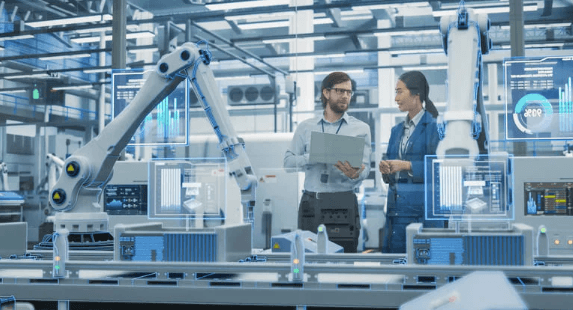
Smart robotics elevate quality and throughput by integrating precise, adaptive manipulation with real-time sensing and analytics. These systems deliver consistent part handling, reduced variance, and higher first-pass yields through continuous feedback loops. Precision metrics quantify improvements, while modular integrations scale across lines. Human robot collaboration balances autonomy with oversight, enabling safe, scalable operations and measurable throughput gains without sacrificing quality or adaptability.
Designing Flexible, Resilient Supply Chains With Automation
The approach measures cycle times, inventory turnover, and disruption recovery rates to quantify resilience.
It emphasizes adaptability within flexibility constraints and lean cost management, enabling proactive risk mitigation.
Supplier collaboration aligns automation-enabled data sharing with shared objectives, accelerating response and reinforcing operational continuity across networks.
Building Your Roadmap: From Pilot to Full-Scale Automation
Navigating the transition from pilot programs to full-scale automation requires a structured, data-driven roadmap that aligns technical feasibility with operational value.
The plan prioritizes measurable milestones, scalable architectures, and risk containment.
It integrates cutting edge sensors and human robot collaboration to enhance safety and productivity, enabling phased deployment, transparent ROI, and continuous improvement while preserving workforce adaptability and strategic freedom.
Frequently Asked Questions
What Are the Hidden Costs of Maintenance for Automated Systems?
Hidden costs include maintenance budgets, training needs, and cybersecurity risks; data quality impacts production lines. Maintenance demands staff shifts amid demand spikes, redefines employee roles, and demands scalable planning to safeguard uptime while balancing cost and freedom.
See also: How Crypto Exchanges Make Money
How Do Robots Impact Employee Job Roles and Training Needs?
Robot integration shifts roles toward higher-skill tasks, while training requirements expand to analytics and safety, enabling process optimization. Workforce collaboration rises as operators coordinate with automation, increasing scalability and data-driven decision making across the organization.
Can Automation Adapt to Sudden Demand Spikes Without Downtime?
Automation resilience enables swift demand adaptation, allowing systems to reallocate resources and reroute workflows with minimal downtime during sudden spikes. The approach emphasizes scalable redundancy, real-time analytics, and modular processes to sustain output and preserve operational flexibility.
What Cybersecurity Risks Accompany Connected Manufacturing Equipment?
Cyber security risks accompany connected devices in manufacturing, including intrusion, ransomware, and supply-chain compromises. Proactive measures—segmentation, patching, monitoring, and least-privilege access—reduce exposure, enabling scalable, data-driven resilience while preserving operator freedom and innovation.
How Is Data Quality Managed Across Automated Production Lines?
Data governance enforces standardized data capture, validation, and lineage across lines, ensuring accuracy and consistency. Data provenance tracks origin and transformations, enabling traceability, auditability, and quality control, supporting scalable improvements and informed decision-making with freedom in optimization.
Conclusion
Automation redefines manufacturing by elevating uptime, reducing cycle times, and slashing defect variance through precise, adaptive robotics and real-time data. As pilots scale, modular integrations and resilient supply chains enable governance-driven risk management and transparent ROI. The pathway is data-driven and phased, delivering measurable improvements in reliability and throughput. In the long view, “slow and steady wins the race”—but here, steady data governance accelerates value, turning incremental gains into scalable performance.